Meet us at the Salon des Sports et Parasports·Hall 7.1, stand H34, 24–26 November 2026Book a meeting →

Technical article
Natural cork wet-pour safety surfacing for playgrounds, nurseries and schools: single or two-layer, permeable, tyre-free and pigment-free, critical fall height up to 2.20 m.
Four steps, from the cork oak forest to the finished surface on site.
 1
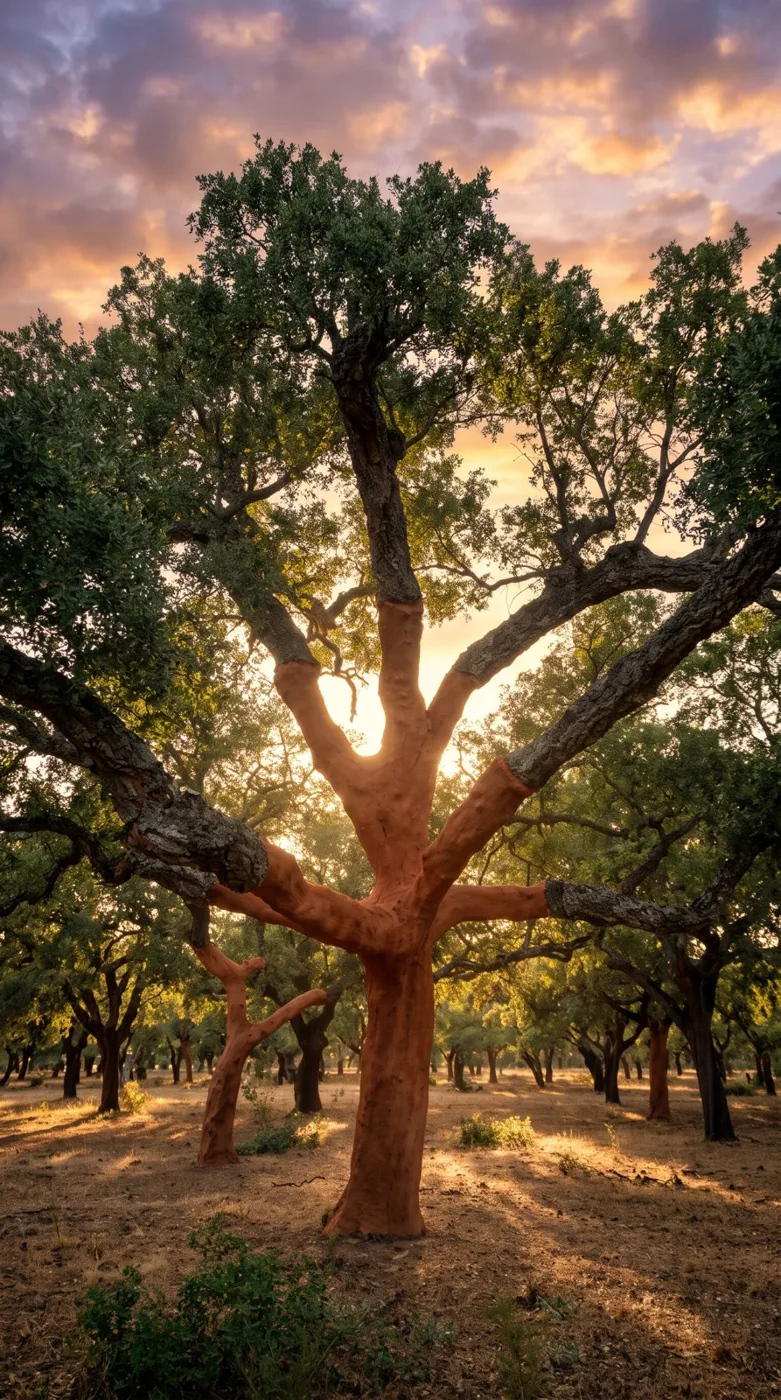
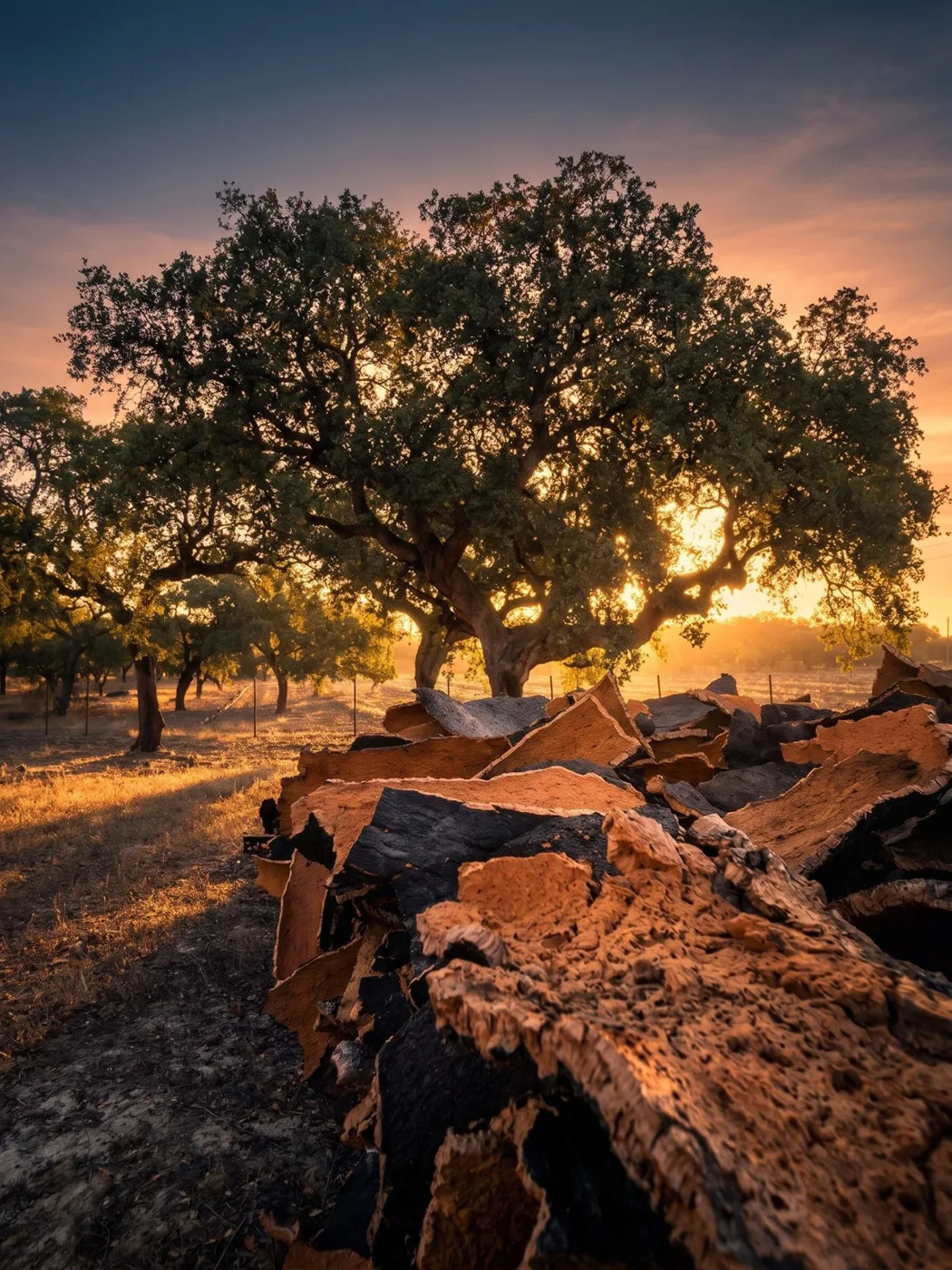
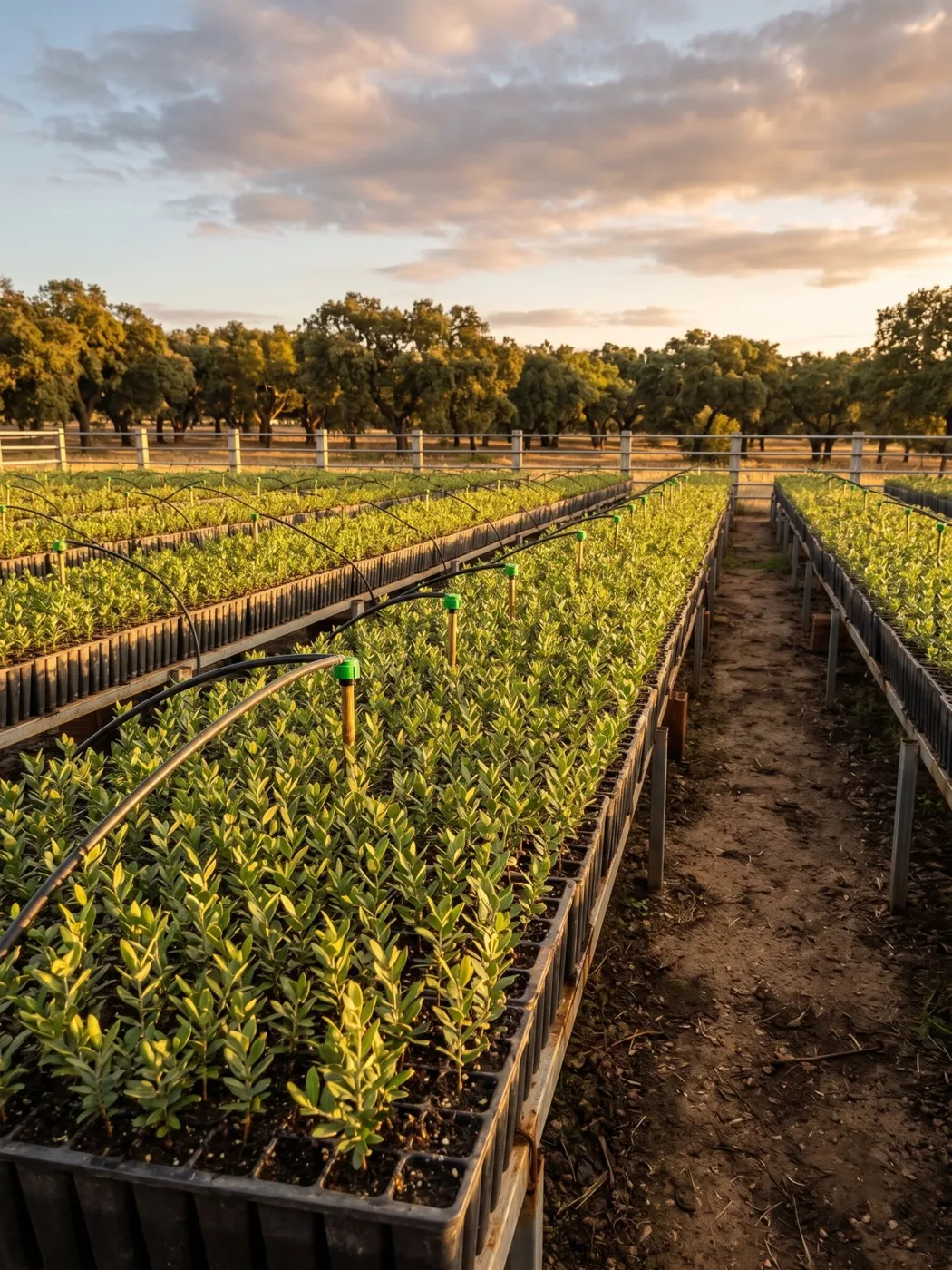
Harvesting: by hand, every nine years, without felling the tree.
 2
Graded granules: 3/7 mm for the base layer, 1/3 mm for the wearing course.
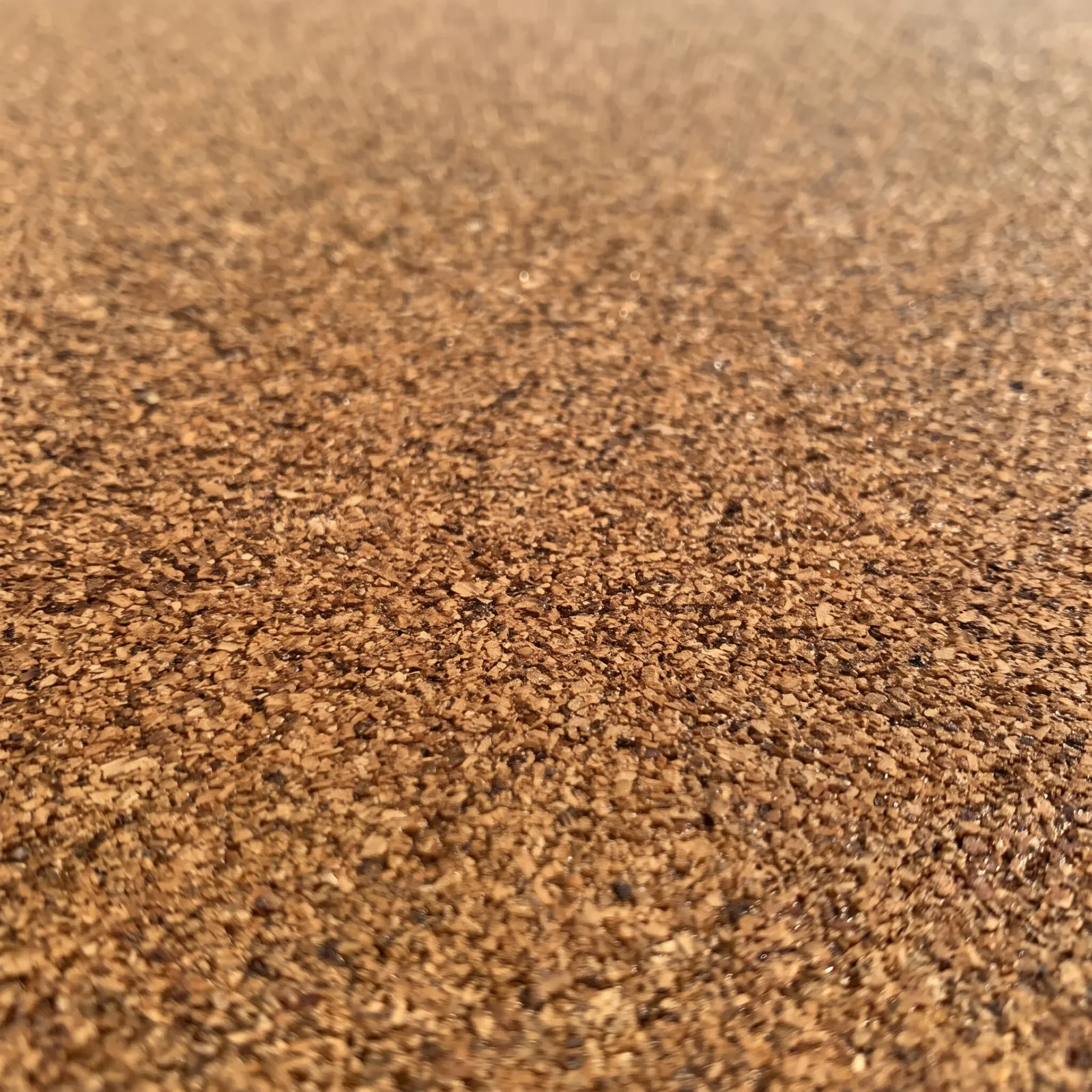 3
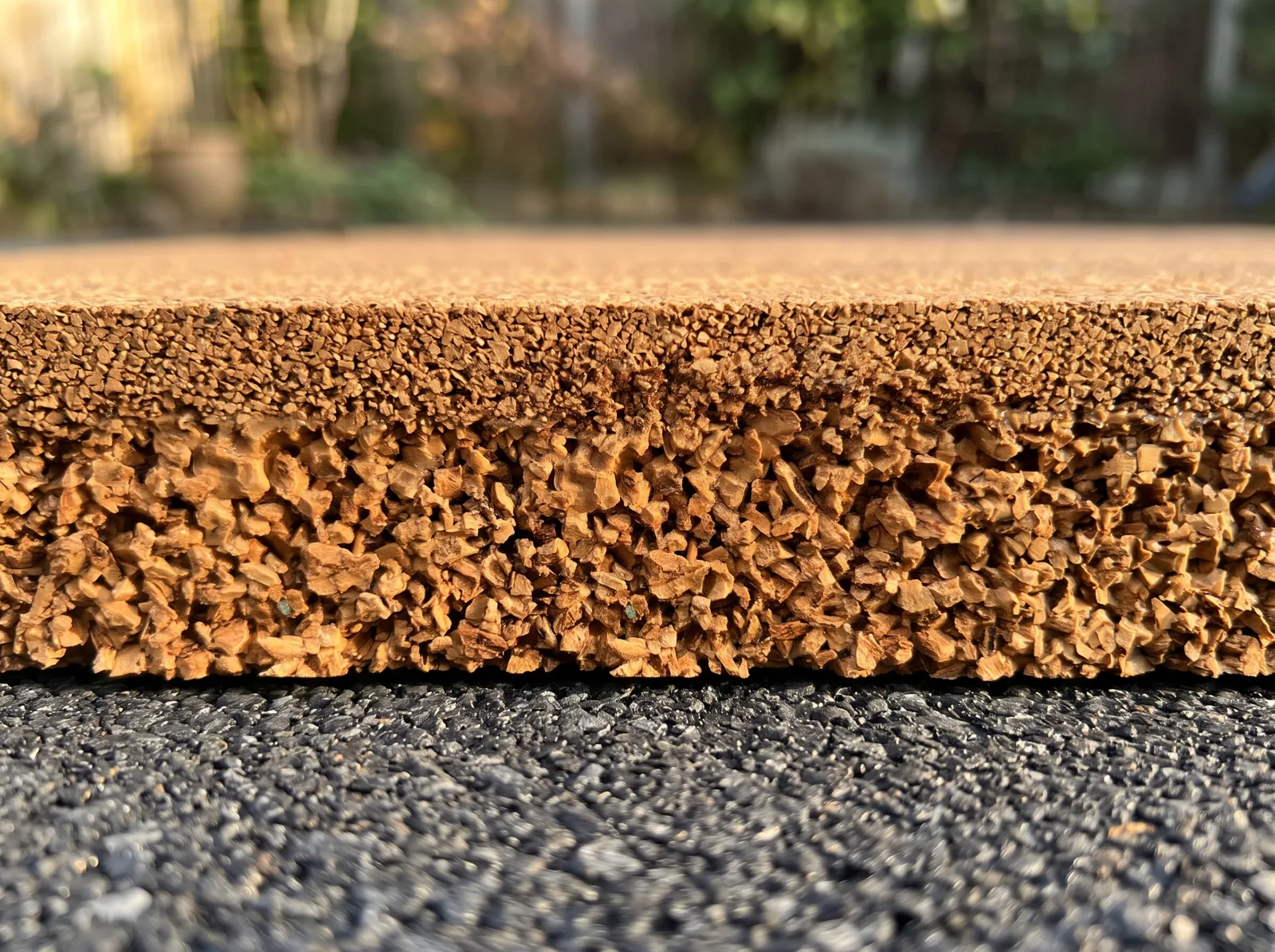
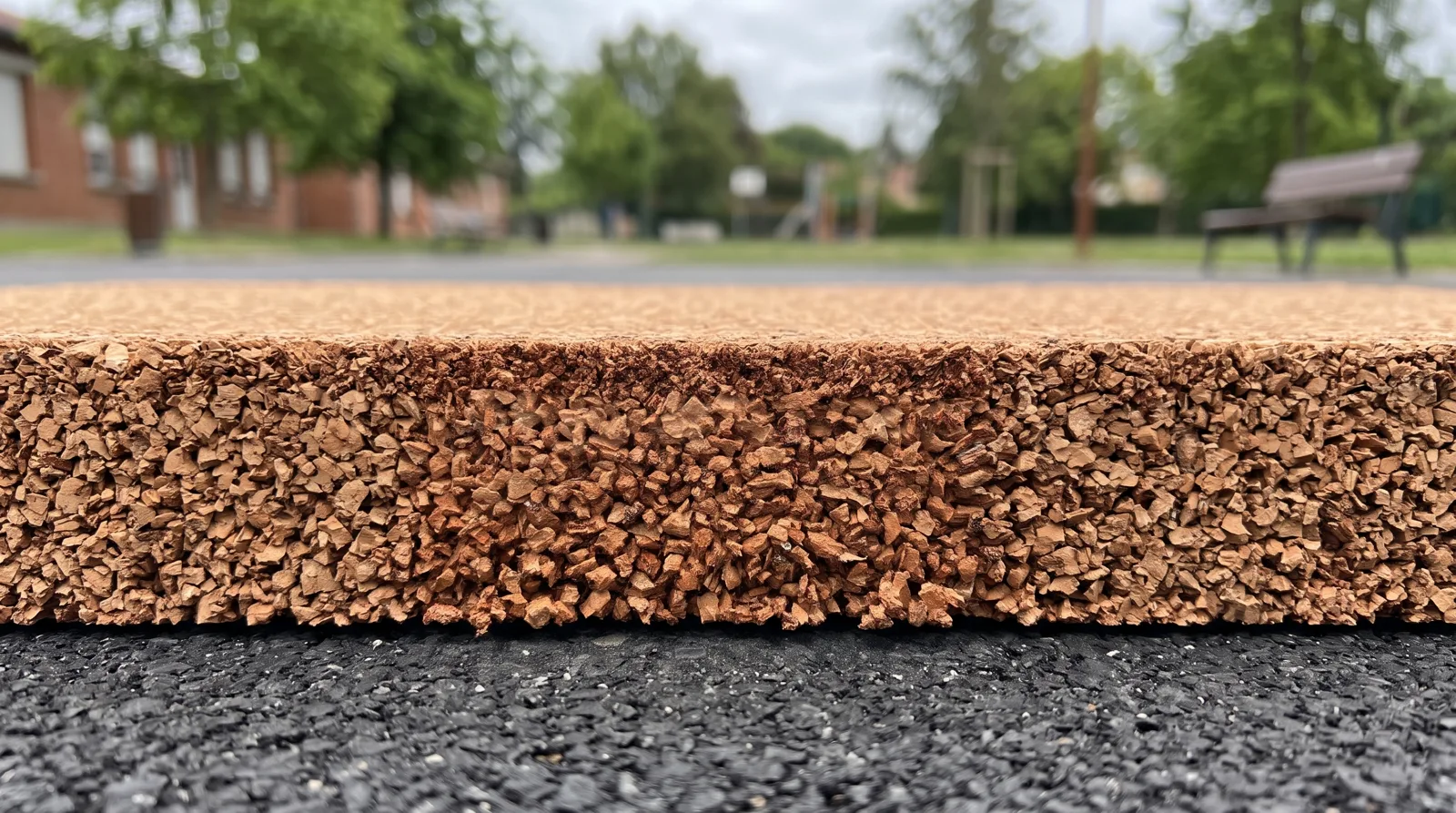
Pouring: a 3/7 mm base layer sized to the fall height, then a 15 mm wearing course in 1/3 mm.
 4
Finished surface: seamless, permeable, natural cork colour.
Illustrative images.
Cork safety surfacing is a seamless, permeable wet-pour surface: natural cork granules bound with a polyurethane resin. It meets growing demand from local authorities, nurseries and schools for a bio-based playground surface, with no tyre crumb and no pigment, tested to EN 1177.
2.20 m critical fall height at 80 mm · 1.0 kg of cork per m² per cm · 48 h before opening to use
Cork suits any project that calls for a natural safety surface that blends into the landscape:
Two grades are available: a medium 3/7 mm granule for the shock-absorbing base layer and a fine 1/3 mm granule for the wearing course.
A single layer of fine 1/3 mm granules. The simplest option for low equipment: springers, play houses, small nursery units and circulation areas around equipment.
A 3/7 mm base layer, whose thickness depends on the fall height, topped with a 15 mm wearing course in 1/3 mm granules. The build-up for multi-play structures, slides and swings.
Laboratory HIC tests to EN 1177, on a concrete slab, values rounded down to the nearest 10 cm. Other thicknesses are possible depending on the project. The installer adapts the thickness, resin dosage and laying conditions to the site, and carries out the on-site acceptance test required by the standard. See our article on the EN 1177 standard.
Allow 1.0 ± 0.1 kg of granules per m² per cm of thickness, excluding resin, depending on batch density. Guide figures for a 100 m² area:
These quantities are for budgeting: the installer adjusts them for the substrate, wastage and the actual density of the batch delivered.
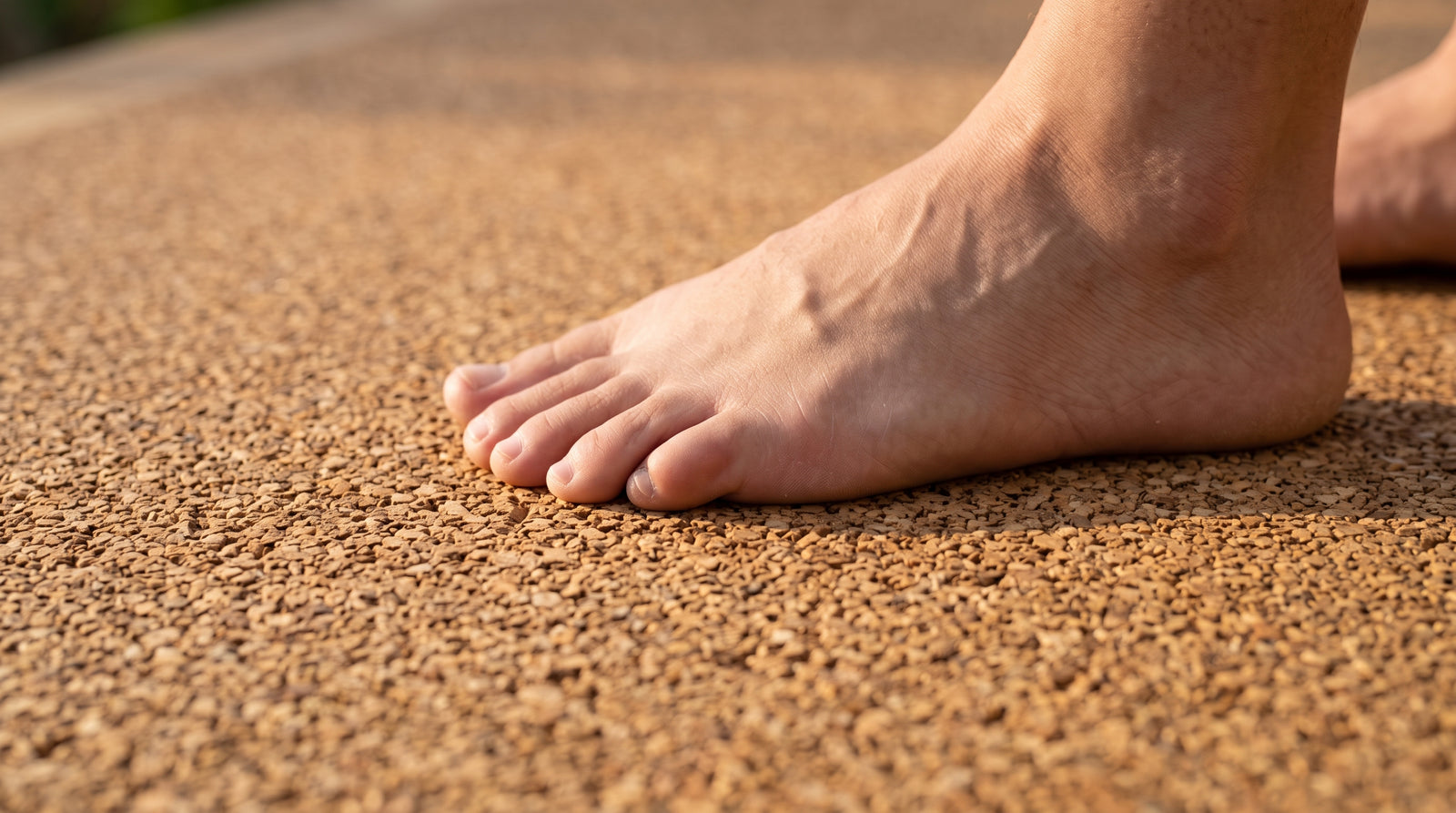
Cork surfacing keeps the natural colour of cork, with no added pigment. The shade varies slightly from batch to batch and weathers over time to a greyish patina under UV, with no loss of performance. A warm finish that blends into landscaped areas and green schoolyards.
Terraludis supplies the materials, the installation protocol and technical support for installers.
Terraludis can supply maintenance products suited to wet-pour surfaces: contact us with a description of your surface and its condition.
All three systems work the same way: a seamless, poured-in-place surface sized to the fall height. Compare them on our playground safety surfacing page.
Yes. The cork system has been tested to EN 1177: from 1.10 m critical fall height in a 30 mm single layer to 2.20 m in an 80 mm two-layer build-up. Compliance of the finished surface is checked by an on-site acceptance test.
In a two-layer build-up, 60 mm covers fall heights up to 2.00 m and 80 mm up to 2.20 m. Beyond that, Calzado goes up to 3.00 m.
Yes. Cork is a natural material, with no tyre crumb and no odour, suitable for nurseries, pre-schools and schoolyards.
No, cork keeps its natural shade. For colours, patterns or markings, cork is combined with or replaced by Calzado, available in 15 colours.
No. Cork is naturally rot-proof and moisture-resistant. Bound with polyurethane resin, it forms a permeable surface that lets water through without holding it.
Depending on the condition of the existing surface, an overlay is sometimes possible. The substrate needs assessing first: contact us with photos of the site.
Terraludis supplies installers with the cork granules, the resin and the installation protocol. For projects outside France, we provide remote technical support (sizing, quantities, installation protocol) and installation is carried out by your local contractor. In France, we can also put local authorities in touch with a partner installer in their area.
Technical data sheets: cork system (PDF) · cork granules (PDF)