Blue and green poured-in-place safety surfacing with flower patterns, around a slide

Playgrounds · schoolyards · nurseries

Poured-in-place playground surfacing (wetpour): EPDM, Calzado and cork

A two-layer poured-in-place (wetpour) system: an elastic base layer sized to the critical fall height (HIC test, EN 1177), finished with a seamless 10 or 15 mm top layer in EPDM, encapsulated ECP, circular Calzado or natural cork.

EN 1177HIC test, critical fall height
3.00 mfall height with 120 mm of Calzado
4systems: EPDM, ECP, Calzado, cork
15Calzado colours, custom patterns on request

How a poured-in-place (wetpour) surfacing system works

Impact-absorbing base layer

Thickness varies with the required performance and the base.

Seamless top layer in coloured granules

Coloured EPDM, encapsulated SBR or a Calzado top layer (circular elastomeric granulate).

Installation & quality control

The result depends on the base, its preparation, the binder ratio and the installation.

Suitable for concrete, asphalt or compacted aggregate sub-bases. The total thickness is set according to the critical fall height and the condition of the base.

HIC safety

Designed to EN 1176 / EN 1177 and the fall height.

System approach

Base layer, top layer and binder specified for each project.

Durability

Carefully chosen materials and site-friendly logistics.

Specification

A configuration matched to real-world use and constraints.

Architecture d’un sol amortissant bicouche

120 mm pour 3,00 m de hauteur de chute

Coupe type en PCE Calzado, coulée sur béton. Les quatre systèmes partagent cette architecture : seule l’origine du granulat change.

1234120 mmépaisseurtotale3,00 mhauteur de chutecritique (HIC)
  1. 1
    Finition Calzado 1/3 mm10 mm · granulats colorés, encapsulation multiple, 15 coloris
  2. 2
    Sous-couche amortissante 3/7 mm110 mm · granulats Calzado liés à la résine polyuréthane
  3. 3
    Primaire d’accrochage0,250 kg/m² · ancre le système sur le support
  4. 4
    SupportBéton ici, ou enrobé, ou grave compactée
120 mmépaisseur totale
→
3,00 mhauteur de chute critique

Schéma de principe, sans échelle. Valeurs indicatives sur béton avec 10 mm de finition (EN 1177) : l’épaisseur s’ajuste à la hauteur de chute de chaque jeu, de 20 mm pour 0,80 m à 120 mm pour 3,00 m.

Our four wetpour playground surfacing systems

The same two-layer design delivers the HIC performance, in versions that differ by granulate origin, budget and the project’s environmental strategy.

Extended palette

EPDM wetpour (coloured)

Granulate origin

Virgin synthetic granulate, coloured right through.

System

Elastic base layer sized to the fall height, with a 10 or 15 mm EPDM top layer.

Key benefits
  • Wide range of colours
  • Excellent UV resistance
  • The long-standing benchmark for compliant playgrounds
Request an EPDM quoteEPDM wetpour guide
Uniform aesthetic

ECP, encapsulated SBR

Granulate origin

Granulate from recycled tyres, colour-encapsulated.

System

SBR base layer with a 10 or 15 mm top layer of polymer-encapsulated SBR.

Key benefits
  • Same design as EPDM
  • Even, uniform colour finish
  • Cost-optimised solution
Request an ECP quote
Circular system

Calzado

Granulate origin

100% made from shoe-sole production offcuts (pre-consumer).

System

Calzado base layer and top layer, 10 mm encapsulated top layer, 15 colours.

Key benefits
  • Tyre-free, traceable and consistent supply chain
  • Less material: 6 kg/m² of top layer instead of 10
  • Fall heights from 0.80 m to 3.00 m
Discover CalzadoCreate a colour blend
Natural finish

Natural cork

Granulate origin

Cork oak bark, stripped by hand without felling the tree and harvested every nine years. Traceable Portuguese supply chain.

System

3–7 mm base layer and a 15 mm top layer of 1–3 mm granules, bound with a one-component polyurethane binder. Seamless, permeable, natural cork colour with no pigment. Open to foot traffic after 48 h minimum.

Key benefits
  • Renewable material, with no tyre or synthetic granulate
  • Free from heavy metals, PAHs and formaldehyde
  • Fall heights from 1.10 m to 2.20 m, in single- or two-layer build-ups
Discover cork surfacing

The same colourful finish in EPDM, ECP and Calzado

A seamless, free-draining, colourful and customisable surface: patterns, pictograms, logos. With these three systems, the choice comes down to budget, material origin and the project’s environmental strategy, not to the final look. Natural cork offers a different finish: a cork colour with no pigment.

To budget a project: cost per m² of impact-absorbing surfacing by thickness, and maintenance cost over 10 years (article in French).

For a sports surface (multi-sport court, tennis, padel), the same material is available as a thin layer under an acrylic finish: Calzado Sport (page in French).

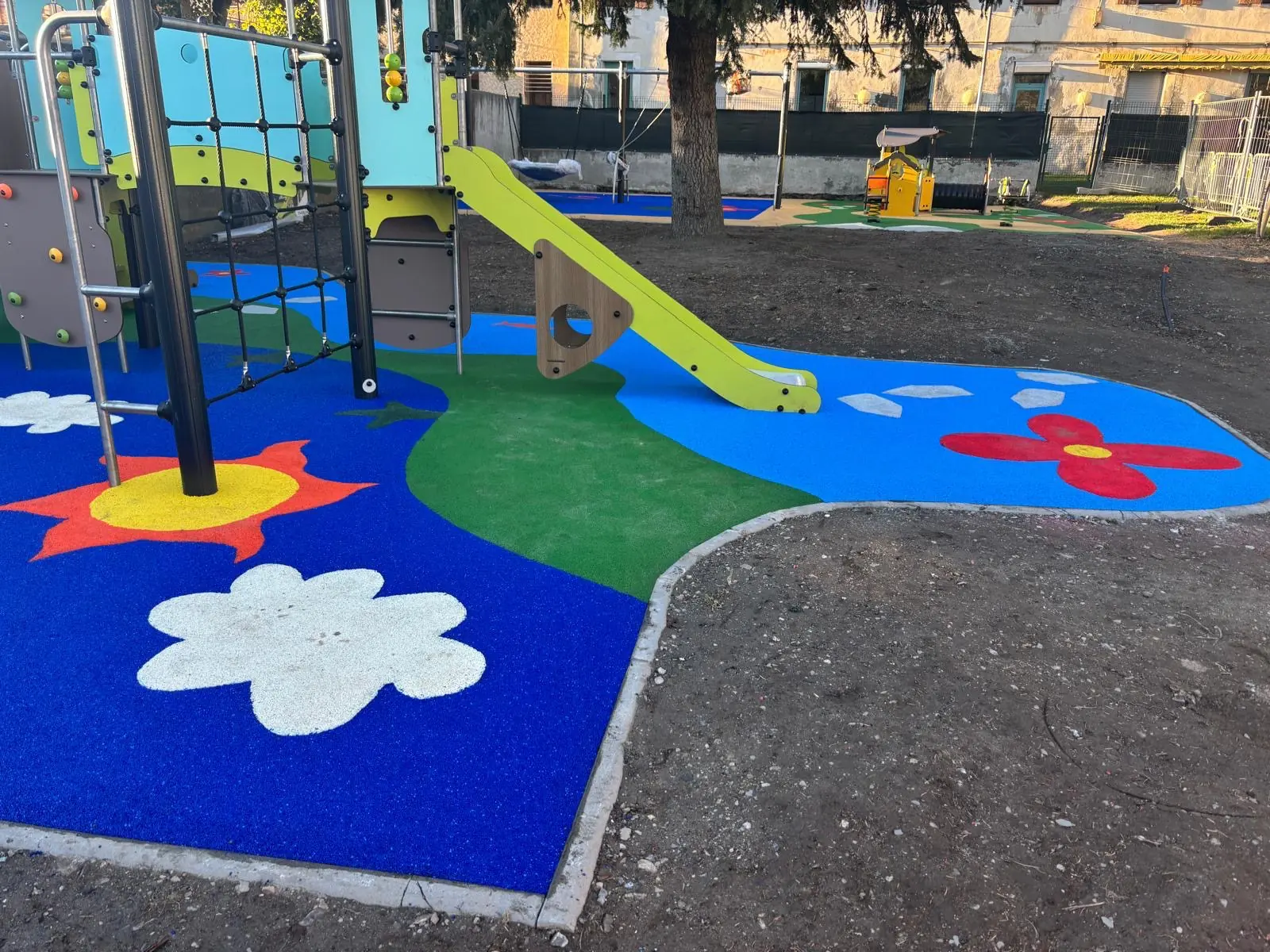
Blue impact-absorbing flooring with flower and sun patterns around a slide
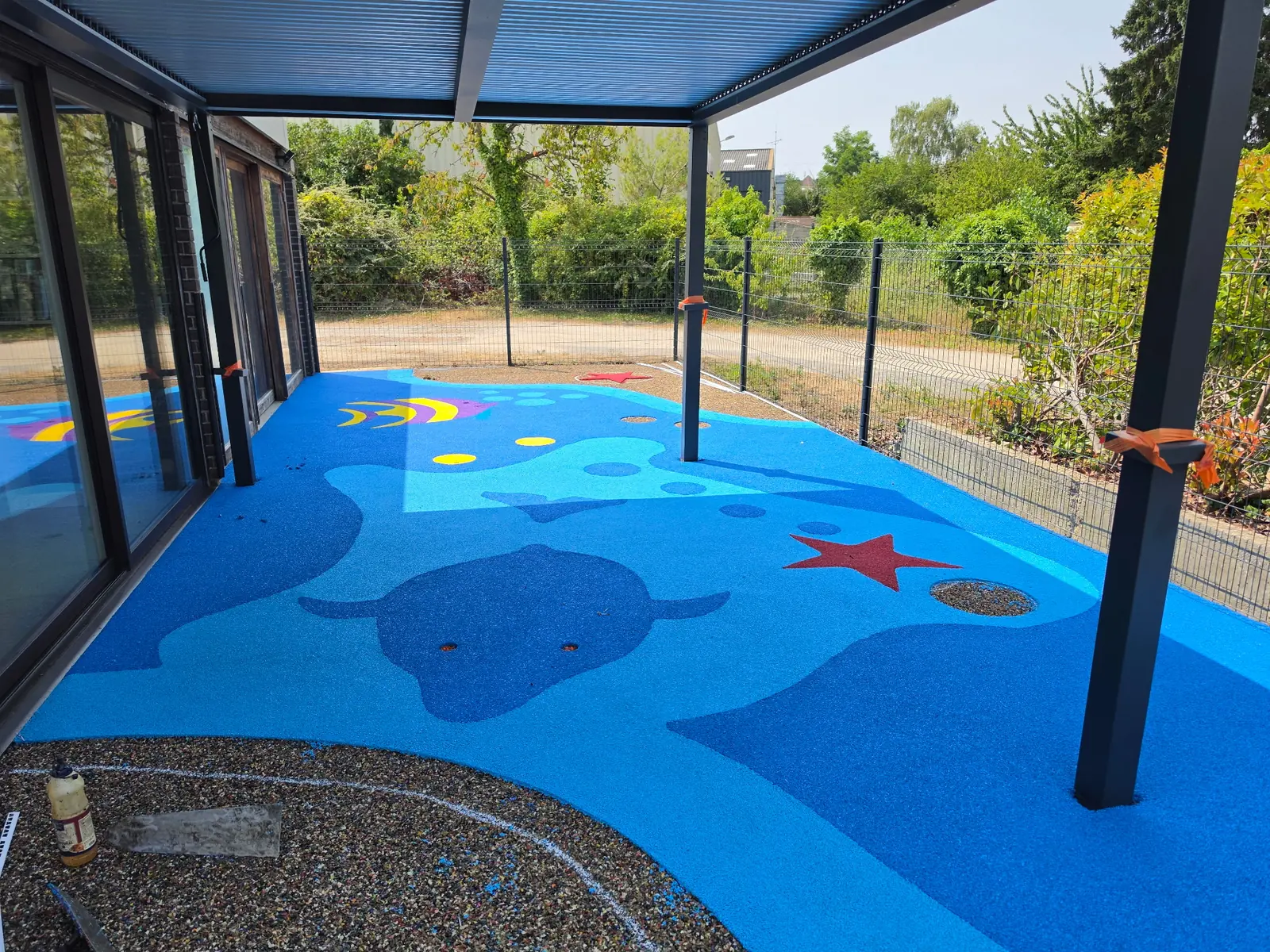
Blue cushioned flooring with marine patterns, fish and starfish, under a nursery pergola
Urban playground with green and sand-colored poured-in-place safety surfacing

Projects by our installer customers using materials supplied by Terraludis. Photos sent by our customers or taken during site visits.

Natural cork: a bio-based system

A two-layer, permeable poured-in-place surface made from cork oak bark harvested without felling. The colour is natural: it varies from batch to batch and weathers to a silvery-grey patina under UV exposure, with no loss of performance.

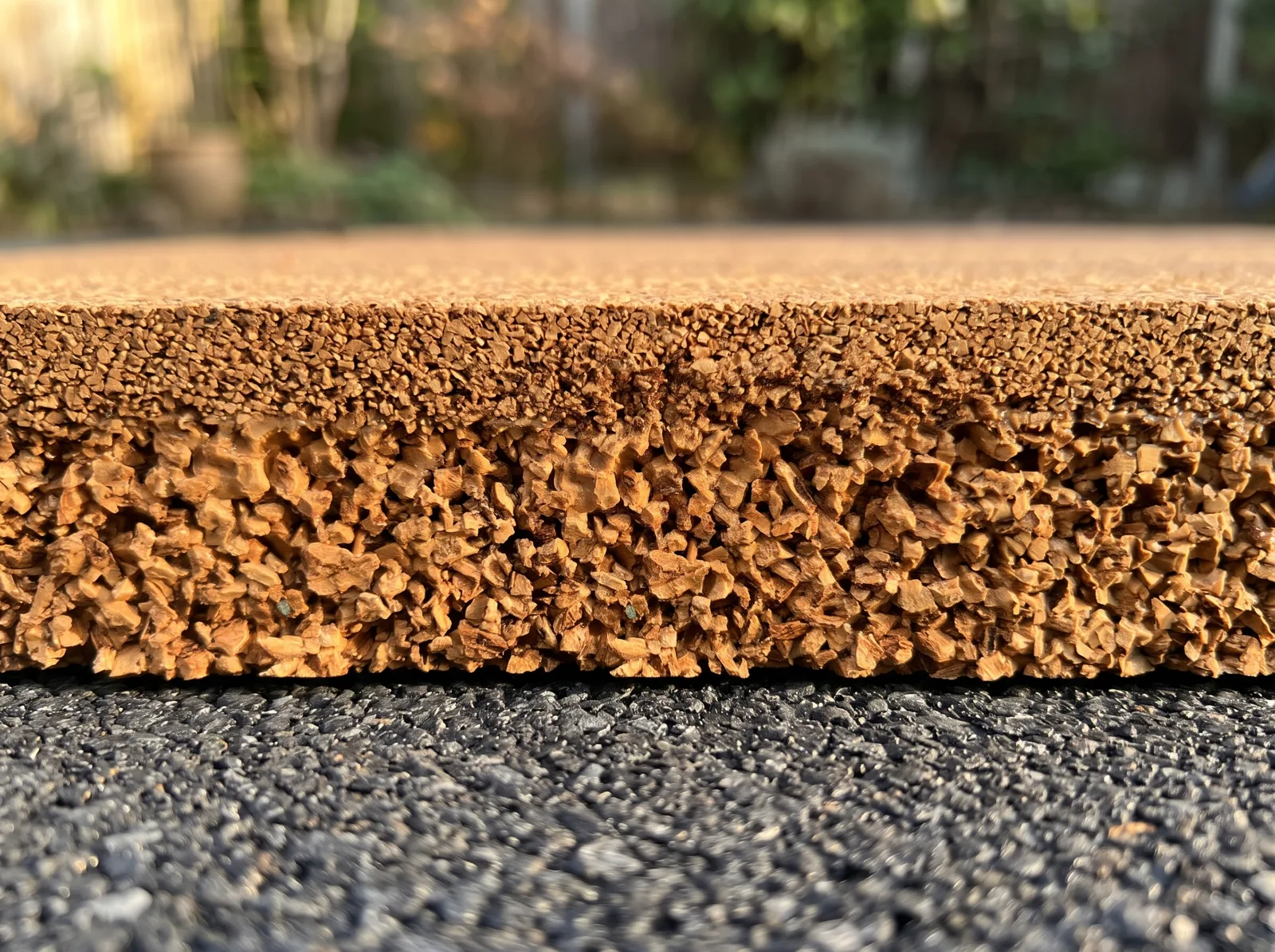
Cross-section of the natural cork system: fine 1/3 mm aggregate finish on top, 3/7 mm underlayment below

System cross-section: 1–3 mm top layer above, 3–7 mm base layer below

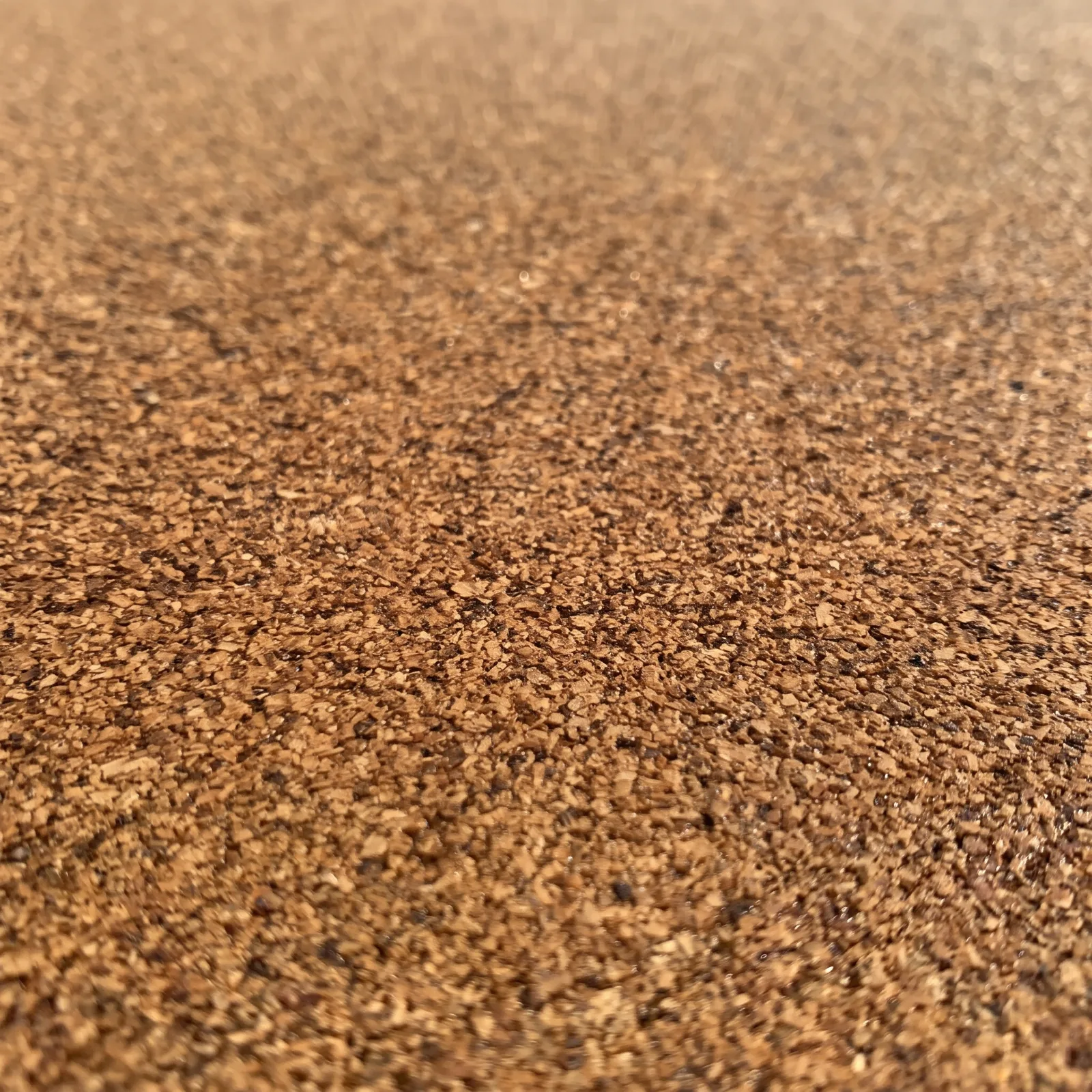
Surface made of fine 1/3 mm natural cork aggregate, top view

Fine 1–3 mm granulate top layer, seen from above

Cork oak forest harvested by hand-stripping, without felling

Cork oak forest, bark stripped by hand without felling

Materials & options for EPDM, ECP and Calzado surfacing

High-performance impact-absorbing surfacing does not depend on a “single product” but on the right combination of base layer, top layer and binder, chosen to suit the use, fall height, base and installation conditions.

Impact-absorbing base layers

  • Recycled tyre granulate (SBR)
  • Recycled EPDM (depending on supply)
  • Calzado circular polymer granulate.
  • Selected according to fall height, comfort, drainage and budget

Top layers & colours

  • EPDM coloured right through (long-lasting finish)
  • Encapsulated Calzado (granulate made from shoe-sole production offcuts)
  • Encapsulated SBR (depending on zones / constraints)
  • Colour management: batch consistency, stock monitoring and traceability to avoid shade variations

Binders & packaging

  • Binders adjusted to installation conditions (temperature / season)
  • Aliphatic binders: recommended for light colours and accurate colour rendering
  • Suitable packaging: kits, site formats, phased logistics

EPDM wetpour, ECP or Calzado: EPDM surfacing offers a wide range of colours, while ECP (encapsulated SBR) and Calzado, a tyre-free circular granulate made from shoe-sole production offcuts, provide alternatives depending on the project’s budget and environmental strategy.

Shock pad for artificial grass: for pitches and areas laid with artificial grass, we also offer an impact-absorbing base layer, sized to the fall height and the intended use.

Discover impact-absorbing artificial grass
Our components (binders, granulates, resin-bound stone carpet) are also available for direct purchase by professionals and discerning private customers.

EN 1176 / EN 1177 standards and critical fall height

The Terraludis impact-absorbing surfacing system is designed to meet the safety requirements for playgrounds and play areas, with performance tailored to each project.

Standards and regulatory framework

  • Compliance with EN 1176 / EN 1177
  • HIC-led approach (Head Injury Criterion)
  • Suitable for public buildings and outdoor public spaces

HIC criterion: how impact attenuation is measured

  • Performance depends on the total system thickness
  • Adjusted by combining base layer + top layer
  • Configuration defined at the design stage

Thickness according to critical fall height

  • Impact-absorbing base layer: thickness varies with the fall height
  • Seamless top layer: 10 or 15 mm
  • Choice guided by use, base and compliance targets

Simulateur

Quelle épaisseur pour votre hauteur de chute ?

0,80 m3,00 m
60 mmépaisseur totale de Calzado conseillée
50 mmsous-couche Calzado 3/7 mm
10 mmfinition Calzado 1/3 mm

Cette épaisseur couvre jusqu’à 1,80 m de hauteur de chute. Valeurs indicatives en PCE Calzado sur support béton, selon la NF EN 1177 : l’applicateur ajuste l’épaisseur selon le support et l’essai de réception.

Demander une étude pour mon projet
Batch traceability, consistent colours and packaging matched to site phasing.

Installing poured-in-place playground surfacing

Technical prerequisites

Suitable base (concrete, asphalt, compacted aggregate)
Flatness and load-bearing capacity checked
Falls and drainage managed
Bonding primer suited to the base

Installation & quality control

Accurate binder ratios
Specified thicknesses respected
Controlled weather conditions
Installation by a qualified contractor
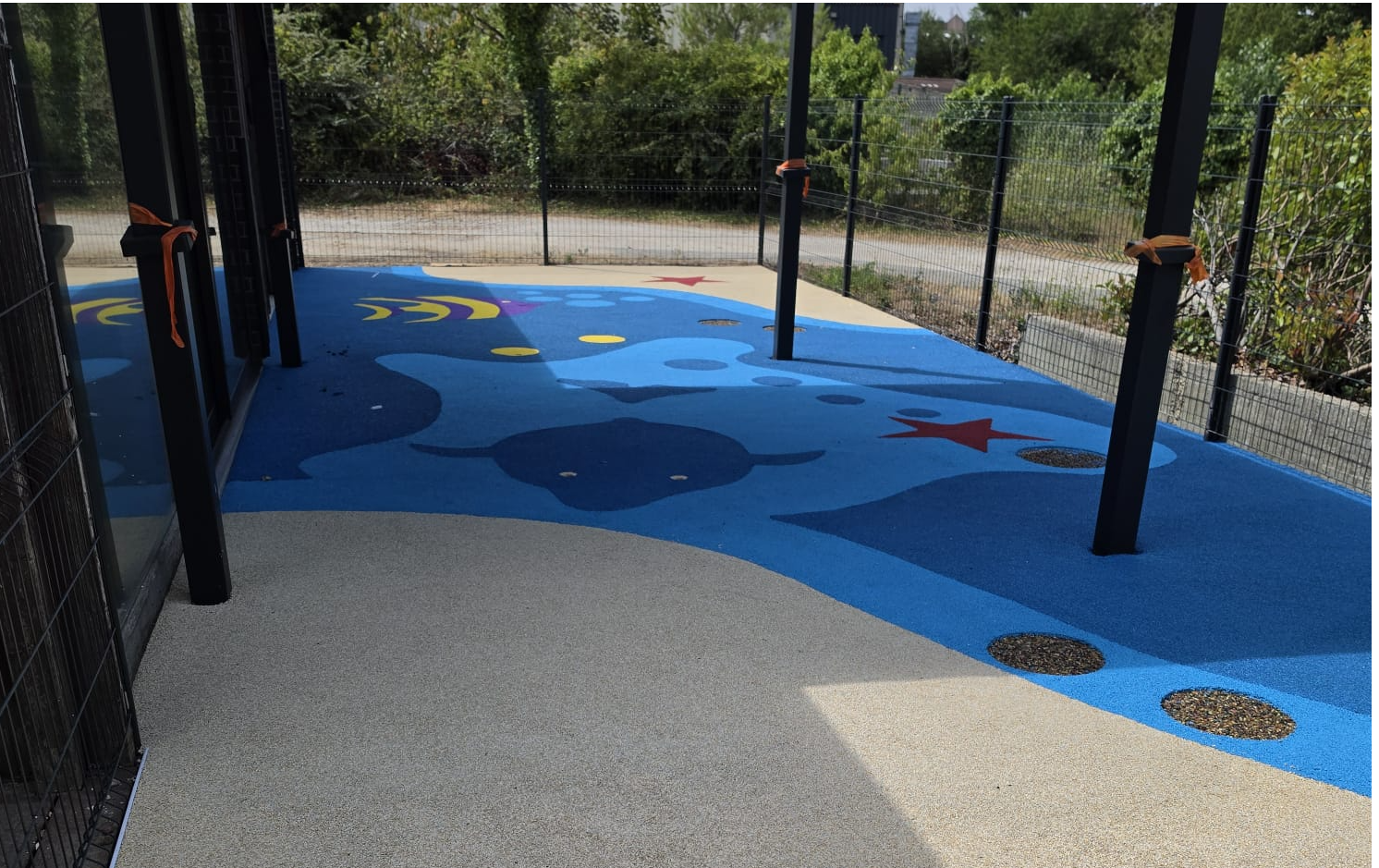
Blue poured-in-place safety surfacing with marine patterns under a nursery shelter, with a sand-finish walkway

Getting your surfacing installed: your installer, our system and support

Terraludis supplies the materials, the binders and the installation protocol. Work with your own installer: we provide the technical data sheets and the installation protocol, with remote technical support from our team by phone or video call. In France, we can also recommend partner installers.

Your own installerInstallation protocolTechnical data sheetsRemote support: phone & video callPartner installers in FranceSupply across Europe: on request

1

You describe the project

Area, play equipment and fall heights, type of base, a few photos of the site.

2

We size the surfacing

Choice of system (EPDM, Calzado or cork), thickness to EN 1177 and material quantities.

3

Your installer lays it

Poured-in-place installation by your installer, following our protocol and with our remote technical support, plus an on-site acceptance test if your tender requires one.

Already working with an installer? We supply them with the materials, the technical data sheets and the installation protocol.

Project in Belgium, Luxembourg or Switzerland? Our pages in French: Belgium · Luxembourg · Switzerland
Frequently asked questions – playground safety surfacing

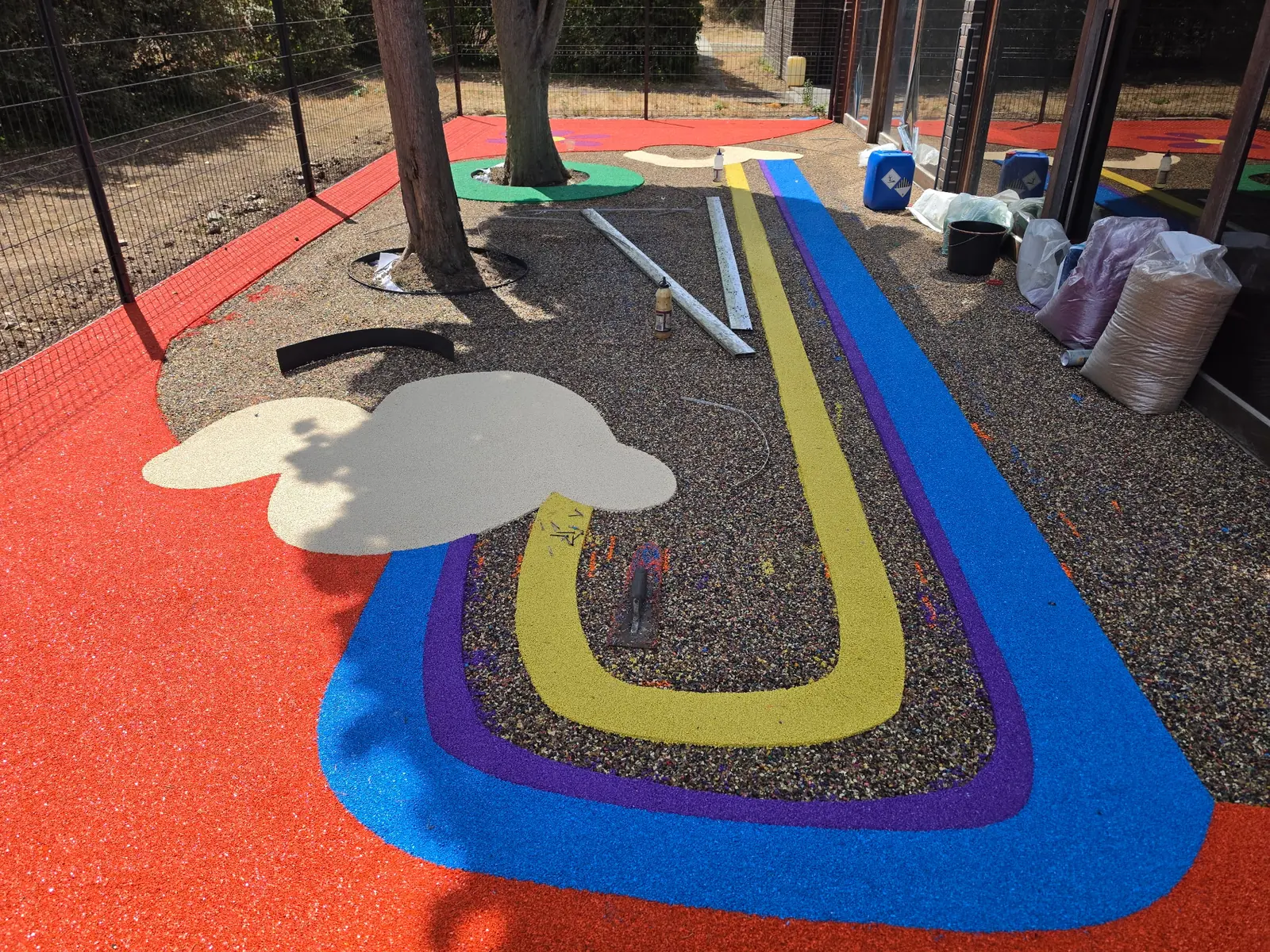
Application of colored strips and patterns in a safety surfacing, work in progress

Laying the patterns and colour bands

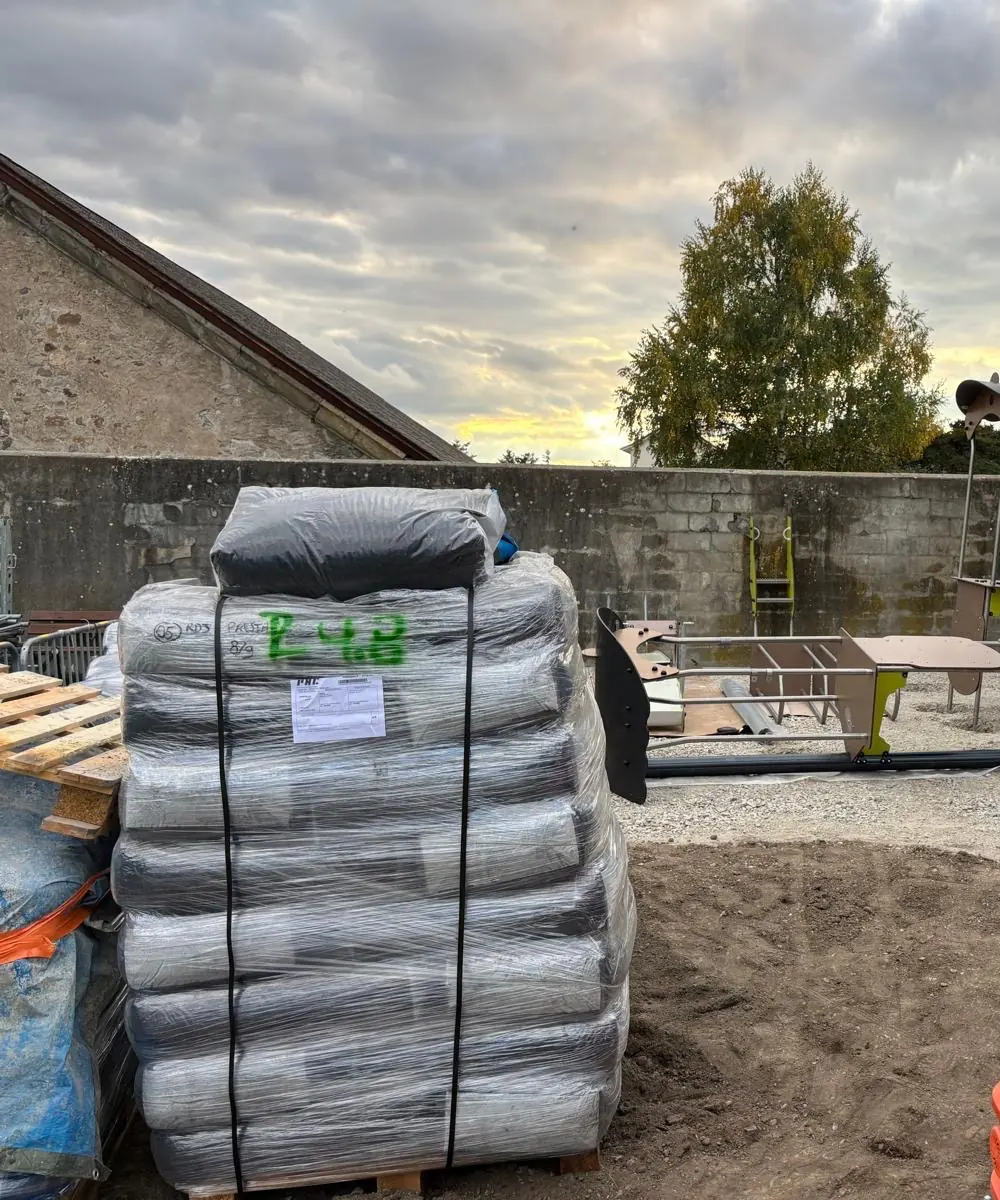
Pallet of aggregate bags delivered to a playground construction site

Materials delivered to site

Quelle norme pour un sol amortissant d’aire de jeux ?
+
Le sol d’une aire de jeux doit répondre à la norme NF EN 1177, qui mesure l’amortissement par deux critères : le HIC (Head Injury Criterion, limite 1 000) et le gmax (décélération maximale, limite 200 g). La norme EN 1176 fixe la hauteur de chute libre de chaque équipement et la surface à couvrir. La performance dépend du système complet (sous-couche + finition) et de la qualité de mise en œuvre. Tout savoir dans notre article norme EN 1177 : HIC, gmax et hauteur de chute.
Comment définir l’épaisseur d’un sol amortissant ?
+
L’épaisseur est déterminée par la hauteur de chute critique à couvrir : la hauteur la plus faible à laquelle l’essai EN 1177 atteint un HIC de 1 000 ou un gmax de 200 g. Elle doit être au moins égale à la hauteur de chute libre de l’équipement le plus haut. L’utilisation du PCE (Polymère Circulaire Élastomérique) permet de réduire l’épaisseur de 10 à 30 mm par rapport aux solutions classiques, ce qui optimise le budget résine et matière. Voir le tableau épaisseur / hauteur de chute du PCE Calzado.
Finition EPDM teinté ou PCE encapsulé : quel système offre la meilleure tenue ?
+

Contrairement aux idées reçues, l’encapsulage haute performance du PCE (Polymère Circulaire) présente des avantages techniques sur l’EPDM teinté dans la masse :

  • Stabilité chromatique : le PCE est une matière exempte de noir de carbone. Contrairement au SBR (pneu), il ne génère aucune poussière noire qui vient ternir la résine lors du malaxage. La couleur reste pure et éclatante.
  • Fixation du pigment : dans un système encapsulé, le pigment est emprisonné dans une gaine de résine polyuréthane haute densité. Cette résine fixe la couleur plus durablement que la structure poreuse d’un EPDM vierge, qui a tendance à se décolorer par « farinage » sous l’effet des UV.
  • Expérience industrielle : ce procédé d’enrobage bénéficie d’un recul de plus de 10 ans en conditions réelles.

En résumé : si l’EPDM teinté est une référence historique, l’encapsulage sur base PCE offre une meilleure fidélité des teintes et une protection accrue contre la décoloration grâce à son armure de résine teintée.

Quelle sous-couche pour une pose sur grave compactée 0/30 ?
+
Sur grave compactée, une sous-couche amortissante est indispensable pour stabiliser le système. On recommande une épaisseur de 50 mm sur GNT. Le système PCE Calzado est particulièrement recommandé pour sa densité et sa stabilité structurelle.
Quelle différence entre le SBR encapsulé (ECP) et le Polymère Circulaire (PCE) ?
+

Ces deux systèmes utilisent des granulats recyclés, mais ils appartiennent à deux générations de matériaux distinctes :

1. L’origine et la pureté (traçabilité)

  • Le SBR (ECP) : issu du recyclage de pneus. Matière robuste mais composition variable.
  • Le PCE (Calzado) : Polymère Circulaire Élastomérique, issu de chutes industrielles neuves (pré-consommation). Conformité REACH et absence de polluants routiers.

2. La performance mécanique

Le PCE est plus résilient, ce qui permet des gains concrets :

  • Gain d’épaisseur : réduction de la sous-couche de 10 à 30 mm à performance égale.
  • Économie : moins de matière à manipuler et moins de résine PU.

3. L’esthétique et le confort

Le PCE offre un rendu colorimétrique plus vif et une souplesse supérieure, idéale pour le confort de marche en milieu scolaire.


En résumé : le PCE Calzado s’impose comme la nouvelle référence pour concilier sécurité sanitaire, optimisation des épaisseurs et engagement circulaire. En savoir plus sur le PCE Calzado.
Quel sol amortissant pour une crèche ou une école maternelle ?
+
Pour les tout-petits, on cherche un sol continu, doux, sans odeur et facile à nettoyer. Le PCE Calzado répond à ces critères avec des couleurs et des motifs libres, sans granulat de pneumatique. Le sol amortissant en liège est l’option biosourcée, au rendu naturel, très appréciée dans les cours végétalisées. L’épaisseur se dimensionne selon les jeux installés, souvent bas en crèche.
Sol coulé en place ou dalles caoutchouc : que choisir ?
+
Le sol coulé in situ forme une surface continue, sans joints, qui épouse les formes de l’aire de jeux, les bordures et les pieds d’équipements, avec des motifs et des couleurs libres. Les dalles caoutchouc se posent vite, mais leurs joints peuvent se soulever ou s’ouvrir avec le temps, et les découpes autour des équipements sont plus délicates. Pour une aire de jeux de collectivité, le coulé en place reste la solution la plus durable et la plus facile à entretenir.
Où voir des réalisations ?
+
Nos références chantiers présentent des aires de jeux, terrains multisports et cours de crèche réalisés par nos applicateurs partenaires, avec photos. Pour le déroulé d’une pose, voir notre retour de chantier PCE Calzado.
Quel est le coût au m² d’un sol amortissant coulé ?
+
Le coût au m² dépend de la hauteur de chute à couvrir (donc de l’épaisseur de sous-couche), de la finition choisie (EPDM, ECP, PCE Calzado ou liège), du support et de la surface du chantier. Terraludis établit une étude et un chiffrage pour chaque projet, et vous oriente vers un applicateur partenaire. Demander une étude.